Recognize conditions that can compromise HbA1c accuracy
Identify patient factors and biological conditions, including hemoglobin variants and altered red blood cell turnover, that may lead to misleading HbA1c results and affect diabetes assessment.

This webinar is presented in English.

HbA1c is a cornerstone biomarker for diabetes diagnosis and monitoring, yet its reliability can be compromised in specific patient populations, particularly those with hemoglobin variants, absence of HbA, or altered red blood cell lifespan. These factors may lead to misleading or clinically inaccurate HbA1c results, potentially affecting patient management.
Drawing on real-world case studies analyzed using the Sebia CAPILLARYS 3 capillary electrophoresis system, this educational content demonstrates how hemoglobin profiling can help laboratories identify abnormal hemoglobin patterns that may interfere with HbA1c interpretation.
Various clinical scenarios illustrate when abnormal findings may preclude HbA1c reporting, contraindicate HbA1c testing, provide clinically actionable insights, or have little impact on result interpretation. Understanding these distinctions enables laboratory professionals to recognize potential interferences, make informed reporting decisions, and support accurate diabetes diagnosis and monitoring.
Identify patient factors and biological conditions, including hemoglobin variants and altered red blood cell turnover, that may lead to misleading HbA1c results and affect diabetes assessment.
Differentiate hemoglobin variants and understand their characteristic presentation on capillary electrophoresis profiles.
Analyze electropherograms to detect potential interferences, assess their impact on HbA1c measurement, and determine whether results can be reported, require qualification, or should not be used for clinical decision-making.
Method matters because identifying hemoglobin abnormalities can transform an HbA1c result from a number into meaningful clinical insight.
Dr. Matthew Wagner earned his undergraduate degree in Chemistry from Emory University before completing a Ph.D. at the Georgia Institute of Technology, where his research focused on microfluidics and ligand attachment in the propagation of pain crises associated with sickle cell anemia. Following postdoctoral research in lung dysfunction, he joined Sebia in 2011 as a Technical Product Specialist and later became part of the Medical and Scientific Affairs team. In this role, Dr. Wagner develops educational content and presents internationally on a wide range of laboratory medicine topics, including hemoglobinopathies, HbA1c testing, serum protein electrophoresis, serum free light chains, multiple myeloma diagnostics, carbohydrate-deficient transferrin (CDT), and other applications of electrophoresis.
Educational Webinar with Dr. Grenache
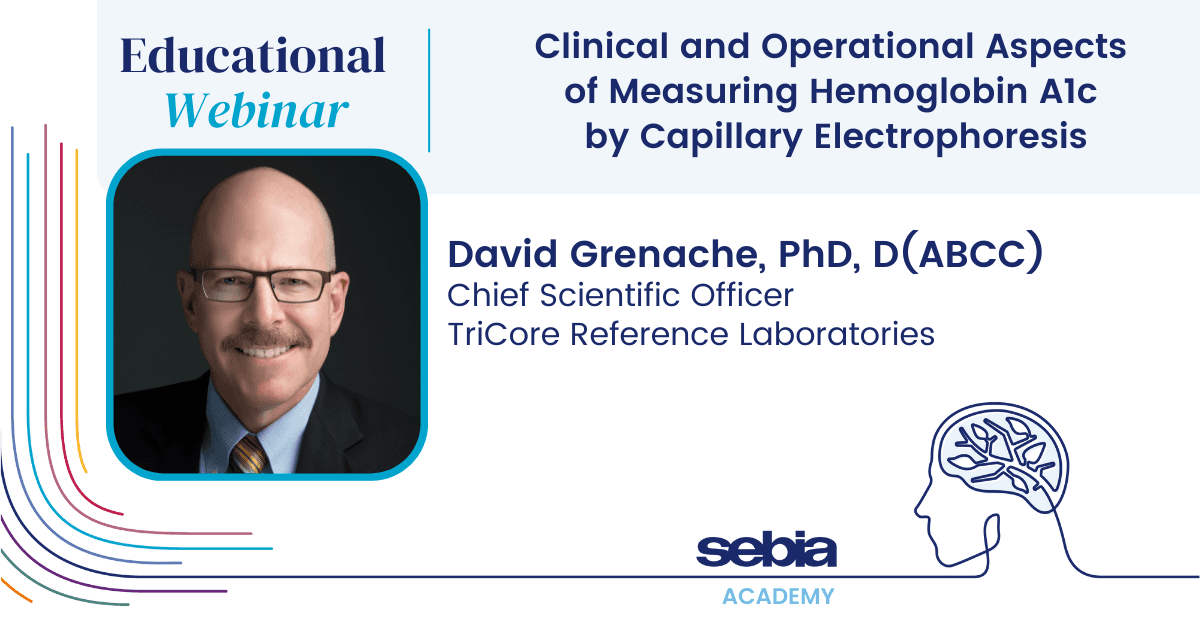
Educational Webinar with Dr. Cas WEYKAMP
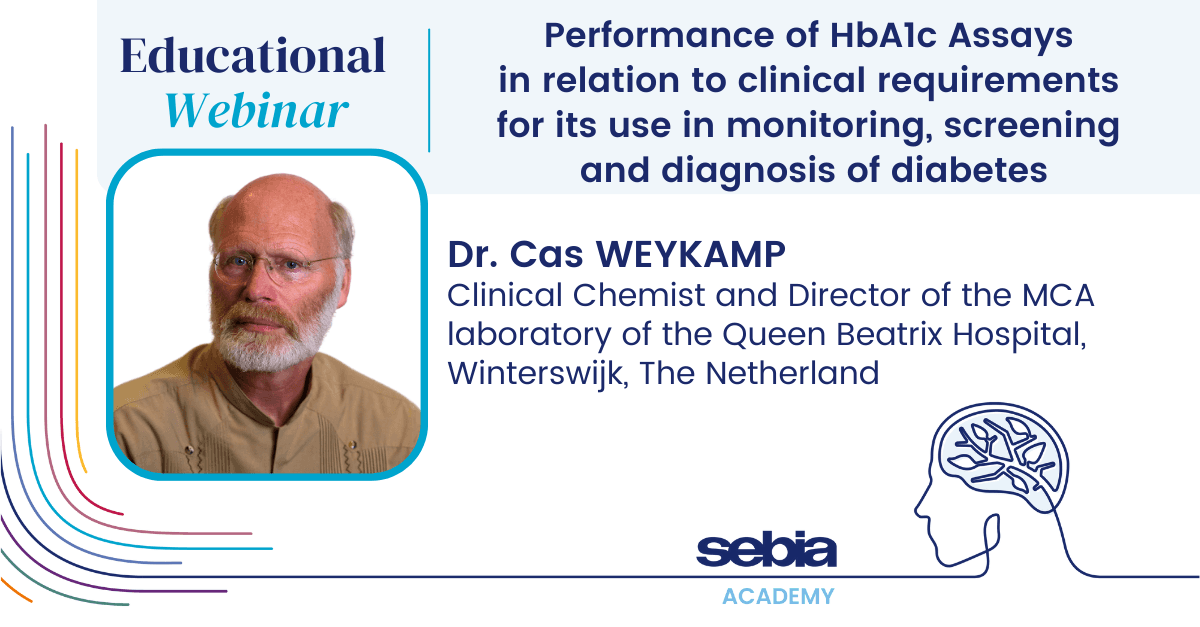
Educational Webinar with Dr. Matthew C. Wagner
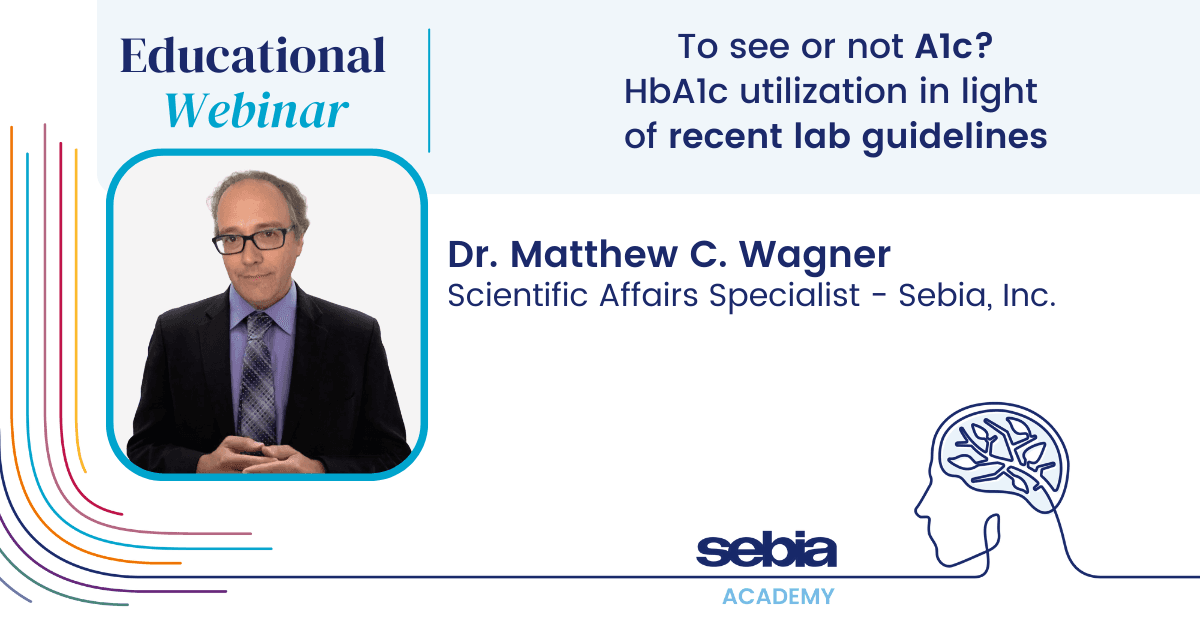
This section contains information intended for wide distribution and may therefore contain product details or information that is not available or valid in your country. Please contact your local Sebia representative. Information intended for healthcare professionals. Carefully read the instructions in the reagent package inserts and instrument manuals.